Planning Guide
How to Plan a Backyard Storage Shed
Plan a backyard storage shed that fits your lot: sizing, setbacks, drainage, doors, HOA rules and layout tips for Kentucky homeowners.
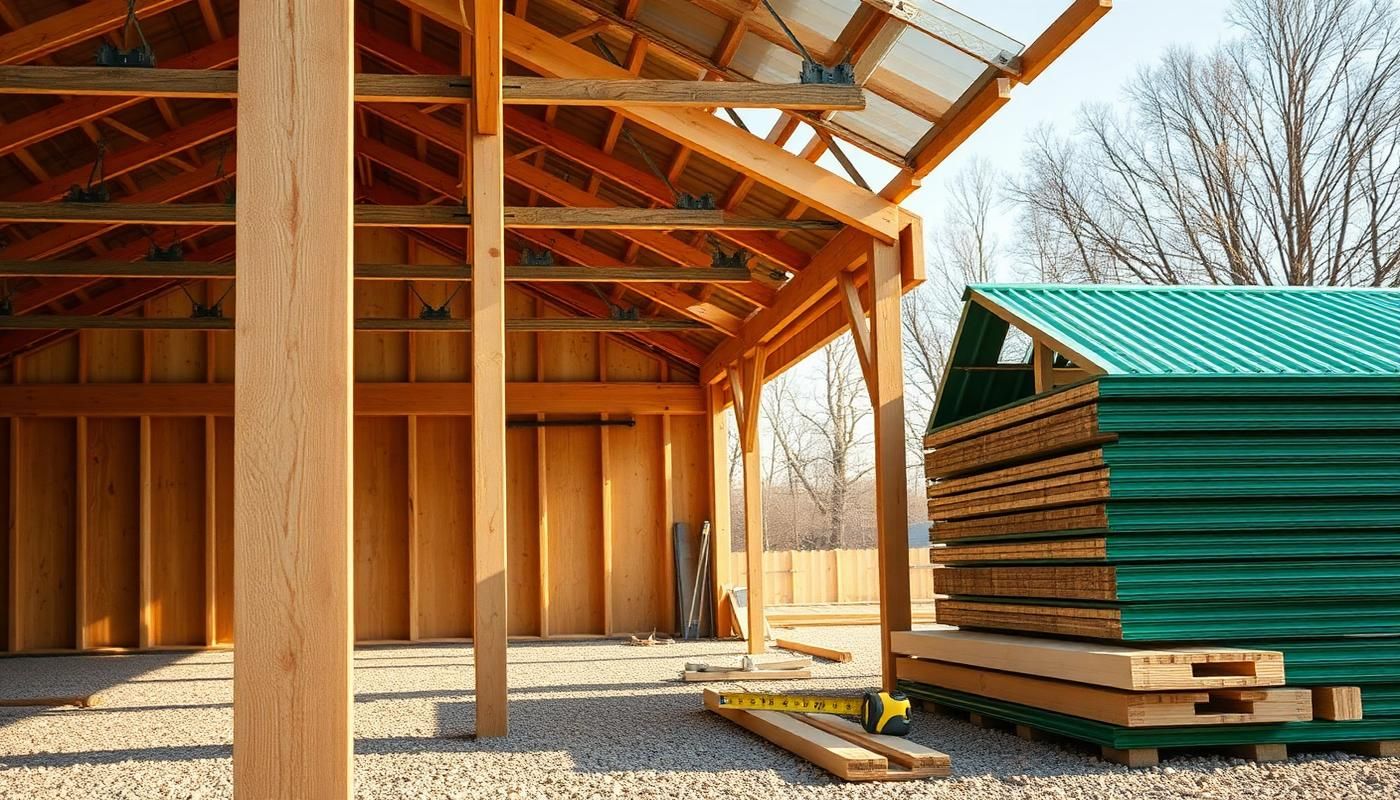
Backyard buildings live under tighter constraints than farm buildings: property lines, neighbors, landscaping and the view from the kitchen window.
Measure the usable yard, not the whole yard
Subtract setbacks, easements, septic field, the deck, the play set and the tree canopy. What is left is your real building envelope, and it is usually smaller than the mental picture.
Right-size the footprint
8x10 handles yard tools and a push mower. 10x14 covers a rider plus seasonal storage. 12x20 starts supporting a workbench alongside storage. Going one size up at build time costs a fraction of adding a second building later.
Setbacks, permits and HOA rules
City lots typically have minimum distances from side and rear lines, and some subdivisions have covenants on siding, roof color or maximum height. Confirm all three before you fall in love with a design.
Drainage and the approach path
Do not put the shed in the low corner. Slope the pad, keep runoff moving away, and think about how you will walk a mower from the shed to the yard in wet grass. A short stone or paver path saves the turf.
Door placement and swing
Double doors on the gable end give you the widest opening. Confirm the doors can open fully without hitting a fence or a shrub. A ramp with a gentle slope beats a steep one every single time.
Interior layout
Plan wall storage before framing: cleat rails, shelf brackets, pegboard zones, a corner for long-handled tools. Keep the floor for the wheeled items. Loft storage over the door end is nearly free space.
Matching your house
Roof color, siding profile and trim color that echo the house make the building read as intentional rather than added on. It also protects resale appeal.
Common questions
How close to my property line can a shed be?
It depends on the jurisdiction and the building size. We check your specific address before ordering materials.
Do I need a concrete pad in a backyard?
Not usually. A well-built gravel pad or treated floor system is common and drains better.
Can you build in a fenced backyard with narrow access?
Often yes — we build on site, so we need a path for materials rather than a gate wide enough for a finished building.
Want this applied to your property? Call 270-277-1669 or request a written quote. We build across Owensboro and western Kentucky.